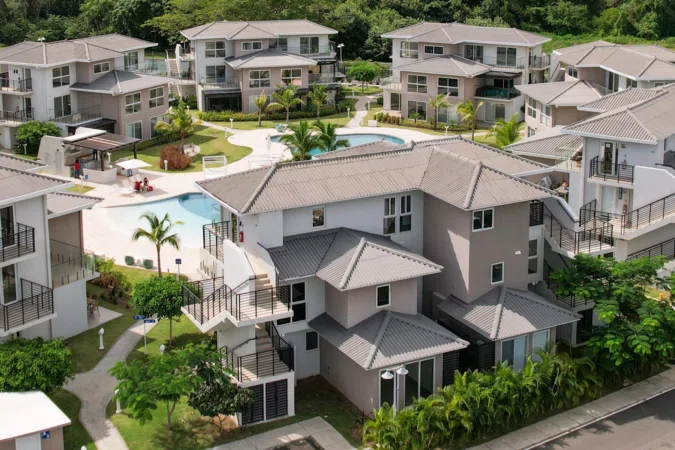
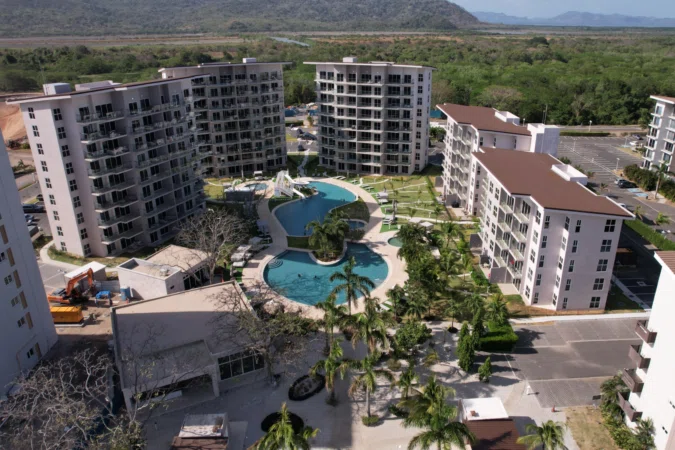
Panama has long held the status of one of the key trade, logistics, and financial hubs in Latin America. The combination of a stable dollarized economy, a strategic geographical position, and liberal tax laws makes the country an attractive destination for international capital. Investing in the local real estate sector offers foreign nationals a direct path to obtaining permanent residency (PR) and subsequently securing a second citizenship.
Economic Profile of Panama: Stability and Global Integration
Panama demonstrates strong macroeconomic indicators within the region: with a population of 4.3 million, the GDP per capita based on purchasing power parity (PPP) exceeds $45,000. The country's economic framework is shaped by several key factors:
- The Panama Canal: The main transport corridor facilitates the passage of about 5–6% of global trade, guaranteeing a stable influx of foreign exchange earnings.
- Financial and Corporate Sector: More than 70 international banks operate in the country, and it hosts the headquarters of over 180 multinational corporations.
- Dollarization and Low Inflation: Using the US dollar as the official currency eliminates exchange rate risks for investors and keeps inflationary processes at a minimal level (extending into deflationary figures in 2025).
- Territorial Taxation: Panama’s tax system exempts from fiscal burden any income generated by residents outside the country's territory.
"Golden Visa" Program: Terms for Permanent Residency and Citizenship
The current Qualified Investor Program provides an opportunity to obtain permanent residency within a tight timeframe through the purchase of residential or commercial real estate.
Program Terms:
- Minimum Entry Threshold: From $300,000. To initiate the immigration process, this amount must be fully paid to the developer or seller. The program allows the purchase of both ready-to-move-in properties and off-plan real estate under construction.
- Family-Oriented: The collective application for status permits the inclusion of the main applicant's spouse, children, and parents.
- Physical Presence Requirements: Panama offers flexible terms for maintaining permanent resident status. To preserve the documents, the investor and their family members only need to visit the country for at least one day every two years.
- Prospect of Citizenship: After holding the investment asset for 5 years, the owner becomes eligible to apply for a Panama passport. Panamanian citizenship ranks 28th in the global index, opening up visa-free entry to 147 countries worldwide, including the UK and the Schengen Zone. Once the naturalization process is complete, the requirement to hold the real estate asset is lifted.
Local Real Estate Market Analysis: Locations and Yields
The Panama real estate market demonstrates high liquidity. The average gross rental yield stands at around 6.94% per annum. According to mid-term forecasts, capital appreciation per square meter is expected to rise within the range of 15–25% by 2031.
Key Investment Districts:
- Downtown: The center of business and tourist activity, featuring high demand for short-term and medium-term rentals.
- Costa del Este: A district concentrated with international offices, highly sought after by foreign top managers and expats.
- Santa Maria: A premium gated community boasting developed infrastructure and professional golf courses.
- Playa Caracol: A promising coastal resort area with strong potential for capital growth.
- Artificial Islands (Reif Islands): An exclusive location in the Bay of Panama with completely finalized luxury developments.
Investment strategies are divided into purchasing ready-to-move-in housing (for immediate rental income generation) and investing at the excavation stage (for a lower entry price). Construction risks are mitigated by choosing major developers with forty years of market experience.
Legal and Financial Aspects of Transactions
The process of closing real estate transactions and subsequently submitting documents for permanent residency is clearly regulated:
- Simplified Bureaucracy: Immigration laws do not require the mandatory presence of a title deed at the time of application. To launch the procedure, providing an officially registered sales and purchase contract is sufficient.
- Compliance and Fund Transfers: The Panamanian banking system enforces strict control over the origin of capital (KYC and AML procedures). All transactions must be legal and transparent. For investors from the Russian Federation, legitimate transit payment schemes have been established through opening checking accounts in third-party countries.
- Exit Taxation: Upon the subsequent sale of the property (after citizenship is obtained), the capital gains tax is 10% of the net difference between the purchase price and the sale price of the asset.